
Rambu Solo
Rambu Solo

Rambu Solo is a traditional funeral ceremony originating from the people of Tana Toraja. It is one of the most well-known cultural traditions in Indonesia due to its long, complex, and meaningful process. Rambu Solo is not merely a burial ritual, but a final tribute to honor the deceased.
In the belief system of the Torajan people, death is not the end of life, but a transition to the spirit world. Therefore, a person who has passed away is not considered truly dead until the Rambu Solo ceremony has been performed. While waiting for the ceremony, the body is usually kept in the family home and treated as if the person were still alive, including being given food and being “spoken to.”
The implementation of Rambu Solo involves the entire extended family and the surrounding community. The ceremony can last for several days to even weeks, depending on the social status of the family. The higher the social status, the more elaborate and grand the ceremony will be.
One of the most striking aspects of Rambu Solo is the sacrifice of animals, especially buffaloes and pigs. Buffaloes play an important role because they are believed to carry the soul to the afterlife. The number of buffaloes sacrificed is a symbol of respect and also reflects the social status of the family. This process is usually carried out publicly and witnessed by many people.
In addition, there are various ritual sequences such as traditional dances, music performances, and funeral processions. The coffin is often placed in rock cliffs or caves, and in some cases, wooden statues called tau-tau are created to represent the deceased.
Today, Rambu Solo is not only a traditional ritual but also a major cultural tourism attraction. Many visitors come to Toraja to witness this unique ceremony. Despite this, the local community continues to preserve the sacred values and spiritual meaning behind every stage of the ritual.
Rambu Solo is a cultural heritage that shows the strong connection between life, death, and belief in Torajan society. This tradition not only reflects respect for ancestors but also strengthens family and community ties.
Debus Banten
DEBUS BANTEN

Debus is a traditional performance art originating from Banten, Indonesia. It is widely known for showcasing acts of physical invulnerability, where performers appear immune to sharp weapons, fire, and other dangerous objects. Beyond entertainment, Debus carries deep spiritual and religious significance within the local community.
Image of Debus Performance
Historically, Debus developed during the era of the Banten Sultanate, particularly under the rule of Sultan Ageng Tirtayasa. At that time, it was used to inspire and strengthen the morale of warriors fighting against colonial powers. Practicing Debus was believed to enhance courage, physical endurance, and spiritual faith.
In a typical performance, Debus practitioners perform extreme acts such as stabbing their bodies with sharp metal objects, slashing their skin with machetes, or enduring fire without apparent injury. These performances are usually accompanied by prayers, chants, and traditional music. This reflects that Debus is not merely a physical display, but also involves strong spiritual discipline and devotion to God.

Also read other ..... Tabuik, Sumatera Barat
The philosophy behind Debus is profound. It represents bravery, strong faith, and self-control. Performers must undergo strict physical and spiritual training before they are able to perform such acts. Because of this, Debus is often seen as a combination of art, culture, and religious practice.
Today, Debus is no longer used for warfare. Instead, it has evolved into a cultural performance and a tourist attraction. It is commonly presented at traditional ceremonies, festivals, and official events. Despite these changes, the traditional and spiritual values of Debus are still preserved by the people of Banten.
Debus stands as one of Indonesia’s unique cultural heritages. It not only amazes audiences with its extreme performances but also reflects the richness of Indonesian traditions and the deep philosophical values passed down through generations.
Lompat Batu Nias
Lompat Batu Nias: An Extreme Tradition and Symbol of Adulthood

Lompat Batu Nias: An Extreme Tradition and Symbol of Adulthood
Definition
Lompat Batu Nias (also known as Hombo Batu) is a traditional practice from Nias Island, North Sumatra, Indonesia. In this tradition, a young man must jump over a stone structure about 2 meters high without touching it.
This act serves as a symbol that he has reached adulthood and is physically and mentally ready to face life’s challenges.
History
This tradition dates back hundreds of years, when villages on Nias Island were often involved in tribal wars. Each village was protected by high stone or bamboo walls.
Young men were trained to jump over these barriers so they could attack enemies or defend their villages. Over time, even though warfare ended, the tradition continued as a cultural heritage.
Meaning and Philosophy
Lompat Batu is not just a physical feat—it carries deep cultural meaning:
Symbol of adulthood: A successful jumper is considered mature
Courage and strength: Represents bravery in facing challenges
Honor: Brings pride to the family and community
Cultural identity: A defining tradition of the Nias people
Process and Training
Performing this jump requires serious preparation:
Boys begin training at a young age
Practice starts with lower obstacles before progressing higher
It requires strength, speed, and precise technique
Not everyone can successfully perform the jump due to its difficulty.
Lompat Batu Today
Today, Lompat Batu is no longer related to war. Instead, it has become:
A cultural attraction for tourists
A performance in traditional ceremonies and festivals
A symbol of Indonesian cultural heritage recognized worldwide
One of the most famous places to witness this tradition is Bawomataluo Village.
Conclusion
Lompat Batu Nias is more than just an extreme jump—it represents courage, maturity, and cultural pride. This tradition highlights the richness of Indonesian heritage and the enduring values passed down through generations.
The Baduy Tribe
 Link vidio
The Baduy Tribe – Guardians of Tradition and Nature in Banten
📍 Definition and Location
The Baduy Tribe is an indigenous community living in the interior region of Lebak Regency, in the Kendeng Mountains area, Banten Province, Indonesia. They are part of the Sundanese people who continue to preserve a traditional way of life and resist modern influences.
🧑🤝🧑 Life of the Baduy People
The daily life of the Baduy people is simple and closely connected to nature. They do not use modern technology such as electricity, vehicles, or electronic devices—especially those belonging to the Inner Baduy group.
Some characteristics of their lifestyle include:
Traveling on foot everywhere without vehicles
Wearing traditional clothing (black or white)
Living in stilt houses made of bamboo and wood
Relying on natural resources for daily needs
Their main principle is living in harmony with nature, as they consider it an ancestral heritage that must be protected.
🏘️ Inner Baduy and Outer Baduy
The Baduy Tribe is divided into two main groups:
1. Inner Baduy (Baduy Dalam)
Strictly adhere to traditional customs
Completely reject modern technology
Do not allow the use of electronic devices
Wear white clothing as a symbol of purity
2. Outer Baduy (Baduy Luar)
More open to outside influences
Have adopted some simple technologies
Wear black or dark blue clothing
Act as intermediaries between the Inner Baduy and the outside world
🌿 Beliefs and Traditions
The Baduy people follow a traditional belief system called Sunda Wiwitan, which emphasizes harmony between humans, nature, and the Creator.
Some of their customary rules include:
Prohibition against damaging forests and the environment
No use of modern technology (especially for Inner Baduy)
Living simply and avoiding excess
Upholding honesty and communal values
🌾 Livelihood
Most members of the Baduy community work as:
Farmers practicing traditional agriculture
Weavers producing handmade textiles
Collectors of honey and other forest products
They do not use chemical fertilizers or modern tools, making their agricultural practices environmentally friendly.
🌏 Uniqueness of the Baduy Tribe
Some unique aspects of the Baduy people include:
Rejecting modernization to preserve tradition
Living without electricity and modern technology
Strong commitment to environmental conservation
Strict adherence to customary laws followed by all members
The Kecak Dance from Bali
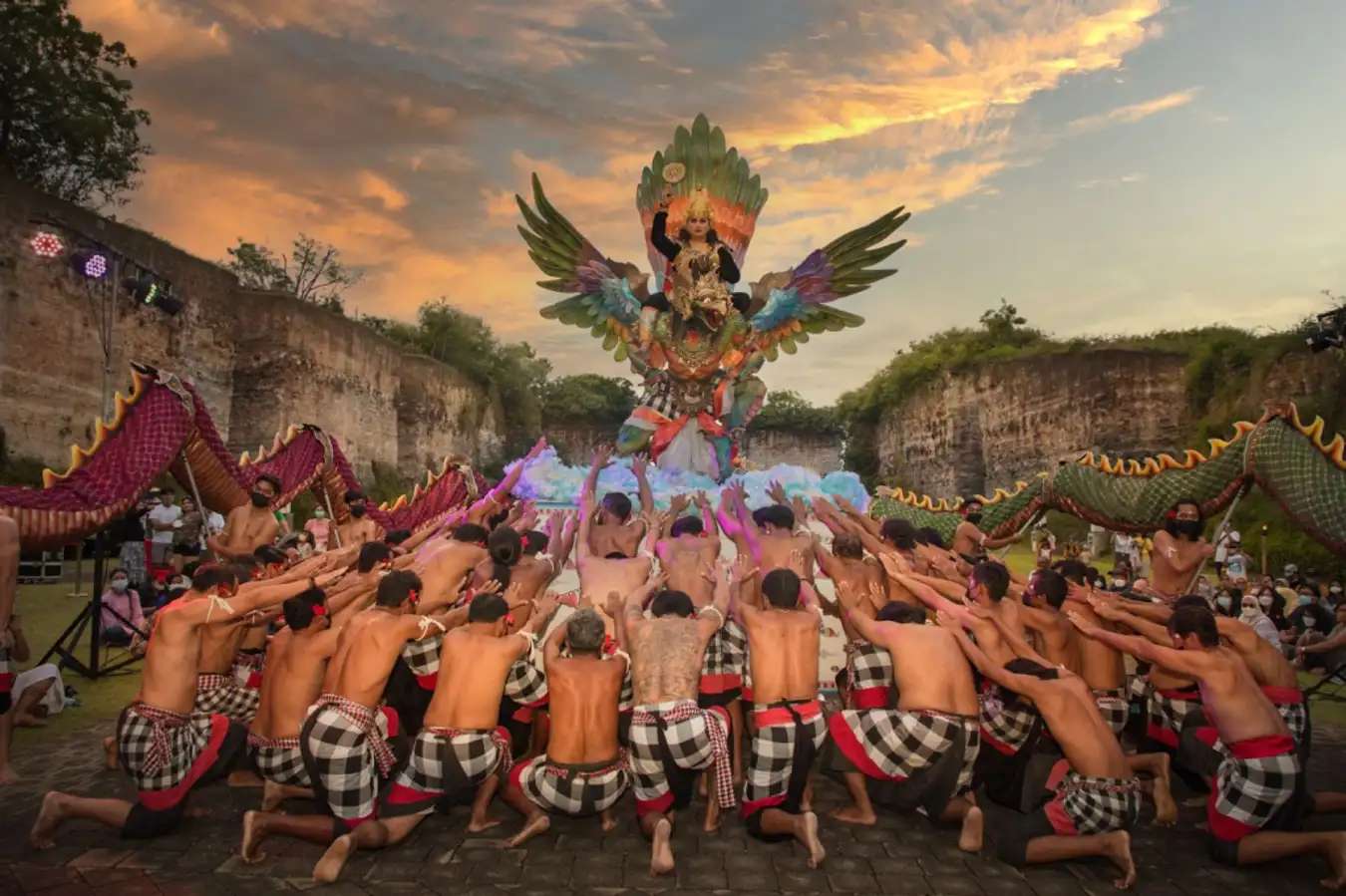
The Kecak Dance from Bali
Definition of Kecak Dance
Bali is widely known as one of Indonesia’s cultural centers, rich in traditional arts. One of its most famous performances is the Kecak Dance, a combination of dance and drama that tells the epic story of the Ramayana.
What makes the Kecak Dance unique is that it does not use traditional musical instruments like gamelan. Instead, the rhythm is created by a group of male performers chanting “cak, cak, cak” repeatedly in a synchronized manner.
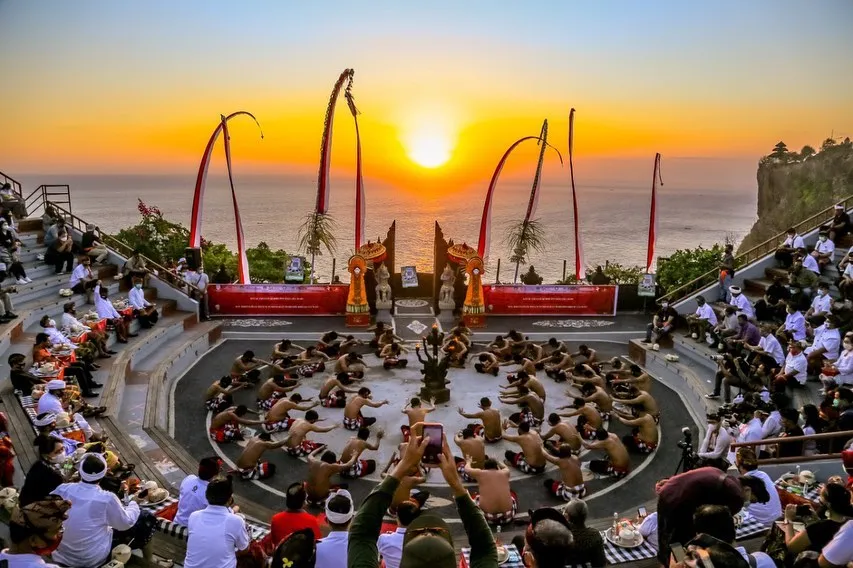
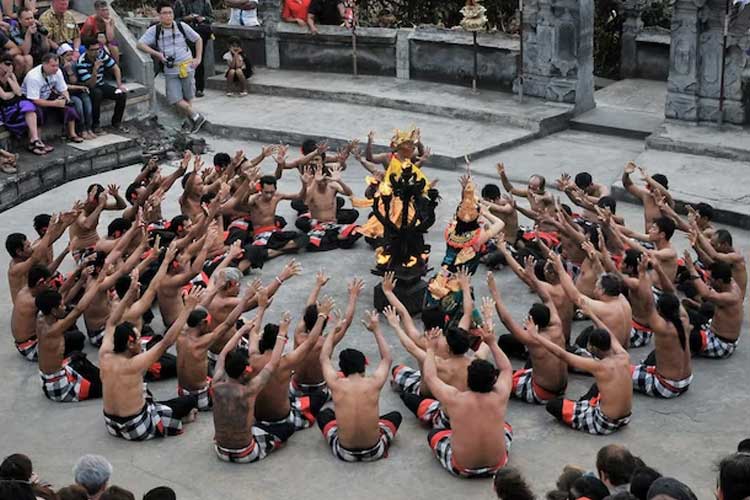
Images of Kecak Dance

History of Kecak Dance
The Kecak Dance originated from a sacred Balinese ritual called Sanghyang, which was traditionally performed to ward off evil spirits.
In the 1930s, the dance was further developed by Balinese artist I Wayan Limbak and German painter Walter Spies. They adapted the ritual into a dramatic performance by incorporating the Ramayana storyline, making it more appealing to audiences and tourists.
Characteristics of Kecak Dance
Some distinctive features of the Kecak Dance include:
No musical instruments – only human voices are used
Large number of performers – usually 50 to 150 male dancers
Circular formation – dancers sit in a large circle
Ramayana storyline – especially the story of Rama, Sita, and Ravana
Meaning and Philosophy
The Kecak Dance is not just entertainment; it also carries deep meanings:
Symbolizes unity and togetherness
Contains spiritual and religious values
Represents the struggle between good and evil
Modern Development and Function
Today, the Kecak Dance is not only performed in religious ceremonies but also serves as a major tourist attraction in Bali. It is often staged at famous locations, especially during sunset, creating a dramatic and unforgettable experience.