The Kecak Dance from Bali
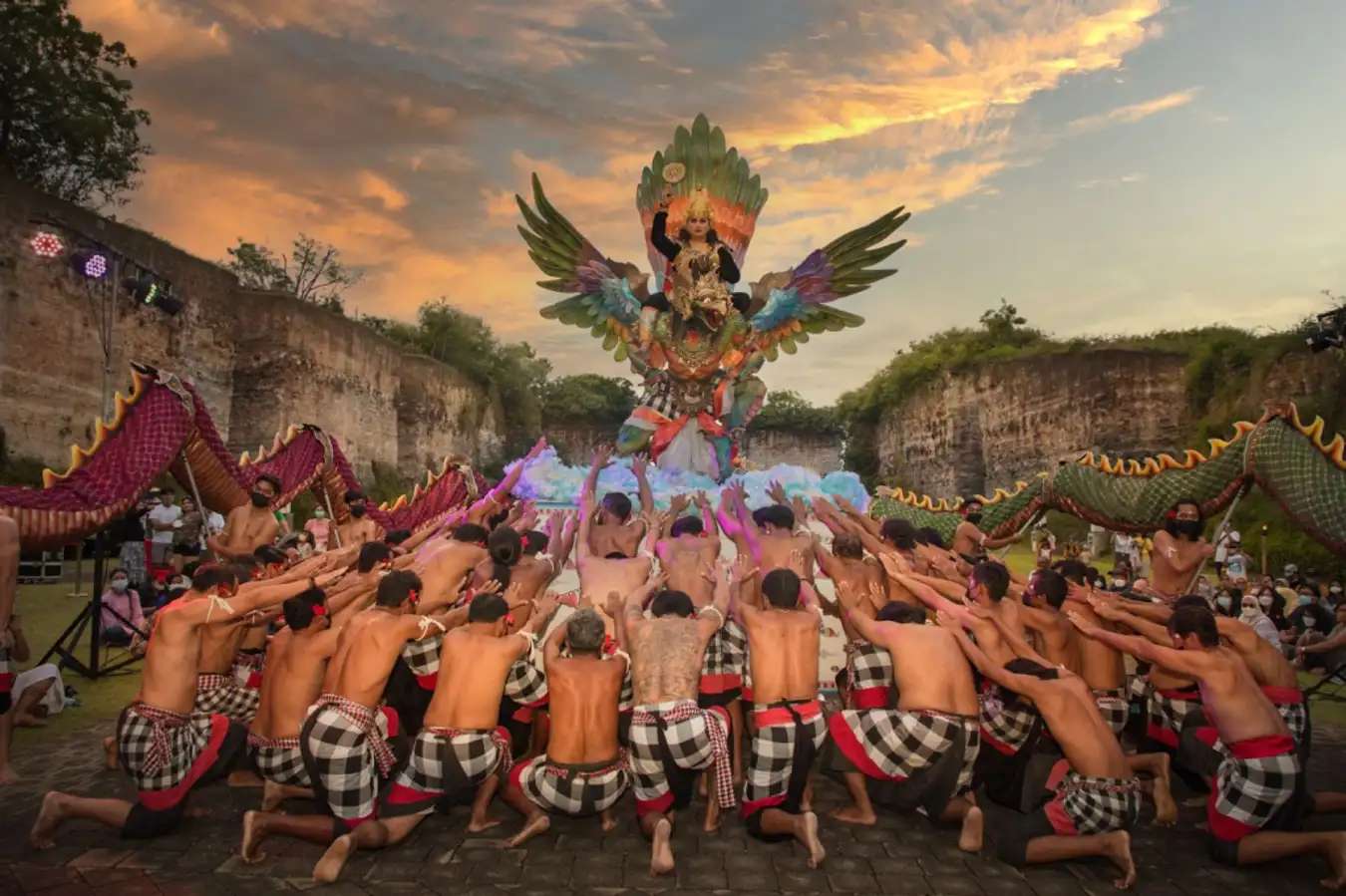
The Kecak Dance from Bali
Definition of Kecak Dance
Bali is widely known as one of Indonesia’s cultural centers, rich in traditional arts. One of its most famous performances is the Kecak Dance, a combination of dance and drama that tells the epic story of the Ramayana.
What makes the Kecak Dance unique is that it does not use traditional musical instruments like gamelan. Instead, the rhythm is created by a group of male performers chanting “cak, cak, cak” repeatedly in a synchronized manner.
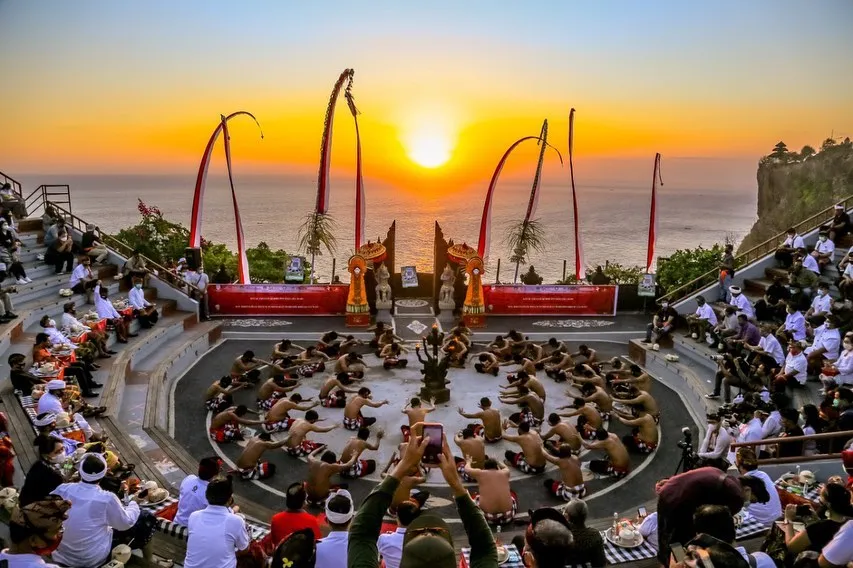
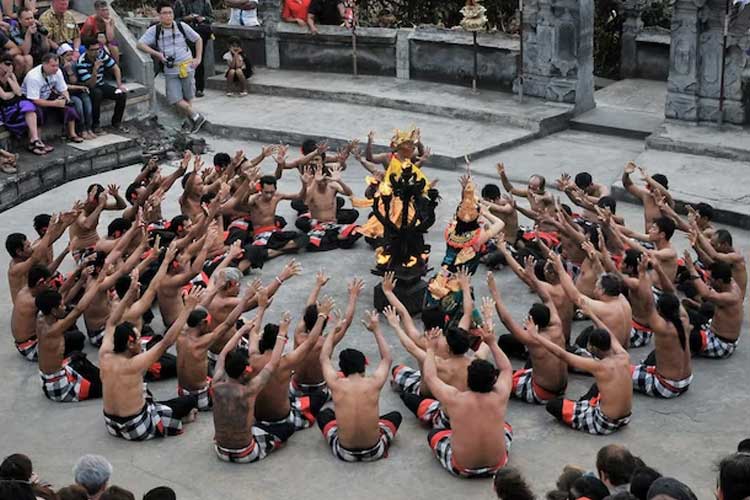
Images of Kecak Dance

History of Kecak Dance
The Kecak Dance originated from a sacred Balinese ritual called Sanghyang, which was traditionally performed to ward off evil spirits.
In the 1930s, the dance was further developed by Balinese artist I Wayan Limbak and German painter Walter Spies. They adapted the ritual into a dramatic performance by incorporating the Ramayana storyline, making it more appealing to audiences and tourists.
Characteristics of Kecak Dance
Some distinctive features of the Kecak Dance include:
No musical instruments – only human voices are used
Large number of performers – usually 50 to 150 male dancers
Circular formation – dancers sit in a large circle
Ramayana storyline – especially the story of Rama, Sita, and Ravana
Meaning and Philosophy
The Kecak Dance is not just entertainment; it also carries deep meanings:
Symbolizes unity and togetherness
Contains spiritual and religious values
Represents the struggle between good and evil
Modern Development and Function
Today, the Kecak Dance is not only performed in religious ceremonies but also serves as a major tourist attraction in Bali. It is often staged at famous locations, especially during sunset, creating a dramatic and unforgettable experience.